Omega-3: Hype or Hero for Teen Brains?
Latest Reads - Omega-3: Hype or Hero for Teen Brains?
Your teen’s brain is juggling schoolwork, a social life, screens, and sport – all while still developing. That’s quite a load. Every message sent, every memory made, every mood, it all relies on the brain’s ability to communicate clearly.
Enter omega-3 fatty acids, specifically DHA (docosahexaenoic acid) and EPA (eicosapentaenoic acid). These essential fats aren’t just buzzwords. They’re brain-builders, mood-supporters, and focus-boosters backed by real science.
The Brain Needs More Than Just Brilliance, It Needs Structure
A review in the International Journal of Developmental Neuroscience describes DHA as “the major fatty acid in the brain membrane,” vital for neurogenesis, synaptic plasticity, and neurotransmission. These are the very processes that power learning, focus, and mood stability. Low DHA levels are linked to slower cognitive function and a higher risk of attention and mood disorders, especially during important phases of brain development like adolescence.
EPA, meanwhile, fine-tunes how the brain handles stress and inflammation. A study in the European Journal of Nutrition found that EPA boosts cell survival and increases neurotrophin receptor activity, key mechanisms that help brain cells grow, repair, and connect more efficiently.
Key takeaway: Think of DHA as the brain’s building block and EPA as its protector.
Why Omega-3 Is a Must for Your Teen.
The teen brain is still under construction, especially the prefrontal cortex, the part responsible for decision-making, focus, and self-control. This is where DHA really proves its value. But here’s the issue: most teens simply aren’t getting enough. Diets today are low in oily fish, and the body struggles to convert plant-based omega-3’s like ALA (from flax or chia) into the active forms – DHA and EPA. In fact, the conversion rate is often under 10%.
That’s why nutritional scientists now call DHA a “conditionally essential nutrient” for teens.
Key takeaway: supplementation can help meet the brain’s actual needs.
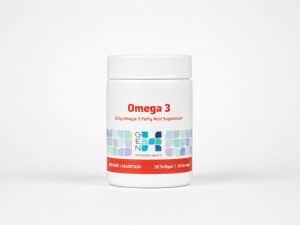
Where GenH Omega-3 Fits In
Each GenH Omega-3 softgel delivers:
- 1000 mg Fish Oil (from anchovy)
- 400 mg EPA
- 300 mg DHA
This 40:30 EPA to DHA ratio is clinically proven to support cognitive performance, focus, and emotional balance – without the fishy aftertaste.
Hype or Hero?
We don’t follow trends, we follow science. Omega-3 supplementation isn’t hype. In our book, it’s a hero. It won’t create overnight brilliance, but it will support the brain’s potential to think clearer, focus better, and recover faster.
References:
Mallick, R., Basak, S., & Duttaroy, A. K. (2019). Docosahexaenoic acid,22:6n-3: Its roles in the structure and function of the brain. International Journal of Developmental Neuroscience, 79, 21–31. https://doi.org/10.1016/j.ijdevneu.2019.10.004
Kou, W., Luchtman, D., & Song, C. (2008). Eicosapentaenoic acid (EPA) increases cell viability and expression of neurotrophin receptors in retinoic acid and brain-derived neurotrophic factor differentiated SH-SY5Y cells. European Journal of Nutrition, 47(2), 104–113. https://doi.org/10.1007/s00394-008-0703-1
Share This :