How Much Protein Does Your Teen Really Need?
Latest Reads - How Much Protein Does Your Teen Really Need?
At GenH, we believe healthy growth isn’t just about filling the tank, it’s about the quality of the fuel. And nothing powers development, strength, and recovery quite like protein. Their actual protein needs might surprise you.
Let’s dive into the latest research and turn it into a manageable plan.
Why Protein Matters for Teens
Teen years are a time of dramatic change. Hormones surge, bones lengthen, muscles grow, and energy demands spike. Protein does most of the heavy lifting:
- It supports muscle growth and repair
- Helps the body make enzymes, hormones, and immune factors
- Works with calcium and vitamin D to build strong bones and connective tissues
For young athletes, protein is even more critical. It’s the “building blocks” their bodies use to repair, recover and grow stronger after every training session.
What Science Says: How Much Protein?
Recent reviews, including ones commissioned by health-policy groups, reaffirm that while baseline guidelines remained stable, specific targets (especially for athletic teens) are being refined.
| Scenario | Daily Target | Notes |
| Baseline, non-athlete teen | ~0.75 – 1.05 g per kg of body weight | For a 60 kg teen, that’s ~45–63 g/day |
| Active / sport-training teen | ~1.4 – 2.0 g per kg | Ensure total energy (calories) is high enough |
| Per-meal “sweet spot” | ~0.11 g/kg/hr in recovery window | Eg. ~15–25 g after exercise for many teens |
| Distribution | Even across meals & snacks | Avoid loading all protein into one meal |
Meal Timing & Distribution
It’s not just how much, but when. Here’s some tips to help your teen get the most out of protein:
- Spread it out: Rather than gulping down 60 g at dinner, aim for 3–4 meals each with 15–30 g of protein.
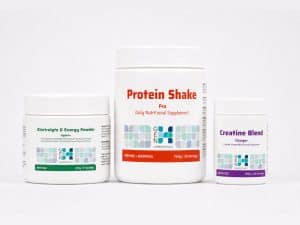
- Post-activity boost: During the first 1–2 hours after training, target ~0.11 g/kg/hr (so ~15–25 g for many teens). This supports muscle protein synthesis (MPS) and recovery. GenH PRO Protein Shake provides 20g of high-quality protein, perfect for this recovery window—especially when appetite is low or time is short after training.
- Snacks count: Don’t ignore small “protein snacks”. They add up and help maintain muscle-building momentum.
Plant-Based or Mixed Diets? Protein Quality Matters
Not all proteins are created equal (but that doesn’t mean plant-based can’t work):
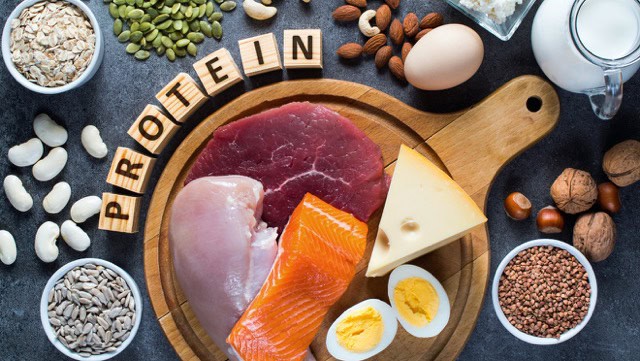
- Leucine is key: A critical amino acid that triggers muscle repair. Animal proteins tend to provide it more densely, but by combining legumes, soy, grains, and fortified foods, plant-based diets can hit the targets.
- Variety is your friend: Mix beans + grains, tofu, nuts/seeds, and dairy (if included) to get a full amino-acid profile.
- Strategic fortification: In some cases, small amounts of higher-leucine foods (e.g. soy isolate, dairy, eggs) can support an otherwise plant-forward plan.
Recent modelling research shows that thoughtfully constructed plant-based patterns can reach ~1.8 g/kg/day and ~2.7–3 g leucine per meal, enough to power strength gains when calorie intake is sufficient.
Smart, Simple Rules of Thumb
Let’s bring this science home with some GenH-friendly tips:
- Start with ~1 g/kg/day from whole-food sources. On harder training days, aim toward 1.4–2.0 g/kg.
- Include 15–30 g protein in every meal plus a recovery snack not just one big protein-loaded dinner.
- Pair protein with carbs, hydration, and micronutrients especially calcium, iron, vitamin D, and antioxidants.
- Use supplements when needed e.g. travel days, restrictive diets, or appetite dips.
- Customise with body mass & sport: A 65 kg teen in endurance or strength training might aim for 90–130 g protein on heavy days; break that into 4 meals × ~25 g + post-workout snack.
GenH products are created to make these daily needs easier to meet, with no guesswork.
We’ll be rolling out recipes, snack primers, meal plans, and meal resources to help you make it easier, because good science deserves to be lived.
Tomas, A. M., Reis, V. M., & Costa, R. J. S. (2022). Effectiveness of current protein recommendations in adolescent athletes. Frontiers in Nutrition, 9, 1016409. https://doi.org/10.3389/fnut.2022.1016409
Marques-Vidal, P., et al. (2024). Nutritional Recommendations for the Young Athlete.
Silva, L. G., & de Araújo, R. A. (2024). Junior athletes’ nutritional demands: a narrative review of nutritional status and needs of young athletes (5–18 years). Frontiers in Nutrition, 11, 1390204. https://doi.org/10.3389/fnut.2024.1390204
Hecht, A. T., et al. (2023). Nutrition for Children and Adolescents Who Practice Sport. Nutrients, 16(16), 2803. https://doi.org/10.3390/nu16162803
Hua, Y., Remer, T., & colleagues. (2022). Adult stature and protein intake during childhood and adolescence: A longitudinal cohort study. The Journal of Clinical Endocrinology & Metabolism, 107(7), e2833–e2843. https://doi.org/10.1210/clinem/dgab493
Share This :